
The UK’s public safety environment has rarely been more demanding. Venues are now required to keep documented procedures for coordinating with security and the emergency services. Threats have grown more complex and more connected — from suspicious activity and hostile reconnaissance to attacks on crowded places. The threats have changed.
But the way the frontline of public safety is organised has not.
A frontline that too often works alone
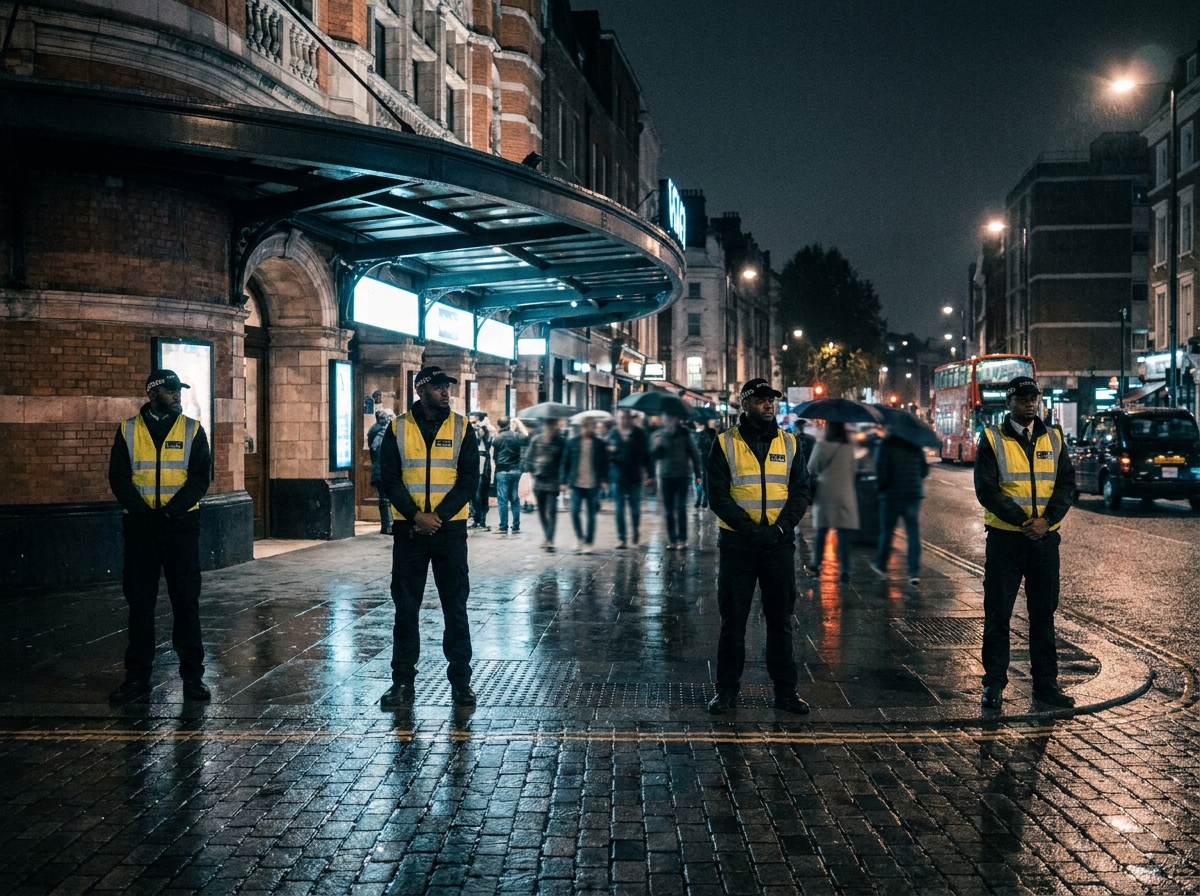
Hundreds of thousands of licensed security officers are the country’s largest visible line of defence — part of the UK’s national security infrastructure — guarding venues, patrolling estates and standing at the door when something begins to go wrong. Private security outnumbers the police by more than three to one. Yet most officers work without the one thing that would make that scale count: a shared picture of what is happening around them.
The result is a workforce that sees a great deal and can share almost none of it. When an incident starts, coordination still depends on personal phones and fragmented radio schemes. The existing systems do not talk to one another. Those gaps are not a failure of the people involved. They are a failure of infrastructure, and with budgets tightly constrained, the answer cannot be to rip everything out and start again. It has to be interoperability, making the systems and the people already in place work together.

How OnSiren connects the frontline
This is the gap OnSiren was built to close. Designed by people from inside the private security sector, it is a real-time shared intelligence platform that brings frontline security officers, the businesses that deploy them and the police into a single network. Officers can talk to the officers around them over push-to-talk, share intelligence the moment it matters, report suspicious activity and incidents as they happen, and receive a briefing from Alpha One, the AI in the system, before each shift — while the businesses and forces with access work from the same real-time picture.
Crucially, there is nothing that has to be torn down to make room for it. OnSiren carries no police powers and duplicates nothing that exists. It is a force multiplier for a workforce that is already deployed — every account is an SIA licence holder, with no anonymous users, and it is free for security officers. The network is open to the police: any force can request access. OnSiren provides what has been missing — a network ready to receive information at street level, from the trained people already standing there.

Putting it to the test
OnSiren is currently piloting the platform with security officers and the police. An activation team is signing officers up on the ground, and because only those with an active SIA licence can join, the network is made up of professionals from the first day.
The point of the pilot is evidence - producing clear, objective data on how many officers connect, how many incidents are reported and how many communications are made. Local stakeholders and community leaders are being briefed throughout, so the people who share these streets understand exactly what is being tested and why.
Only the first step
This is the first of several planned pilots, each one testing the platform somewhere officers are protecting people, places or infrastructure, and each one adding to an evidence base for a wider rollout.
We’ve deliberately built our system to operate without public money or endorsement. The principle is simple: connect the security officers in an area, and the area becomes safer. OnSiren’s mission is to improve public safety. Frontline. Connected.

