
Hundreds of thousands of licensed security officers stand on the frontline of public safety, guarding venues, protecting businesses, patrolling estates and stepping in when something goes wrong. Ask any of them about the job and the same theme returns. The hardest part isn’t always the incident itself. It is facing it alone.
Too often, alone is exactly how they work. No shared picture of the area. No quick way to reach the colleague two streets over. No way to tell the officers around you what you are seeing. The people closest to an incident are the first to see it and, until now, among the last able to act on it together. That isolation carries a cost, wearing people down. Often experienced officers leave the profession, citing a lack of support.
Keeping people safe has never rested on one person. It depends on private security, the police, the emergency services, venues and retailers working as one, with information moving between them at the speed an incident actually moves. Where that coordination breaks down, the officer is more exposed and so is the public they are there to protect.
What changes when officers are connected
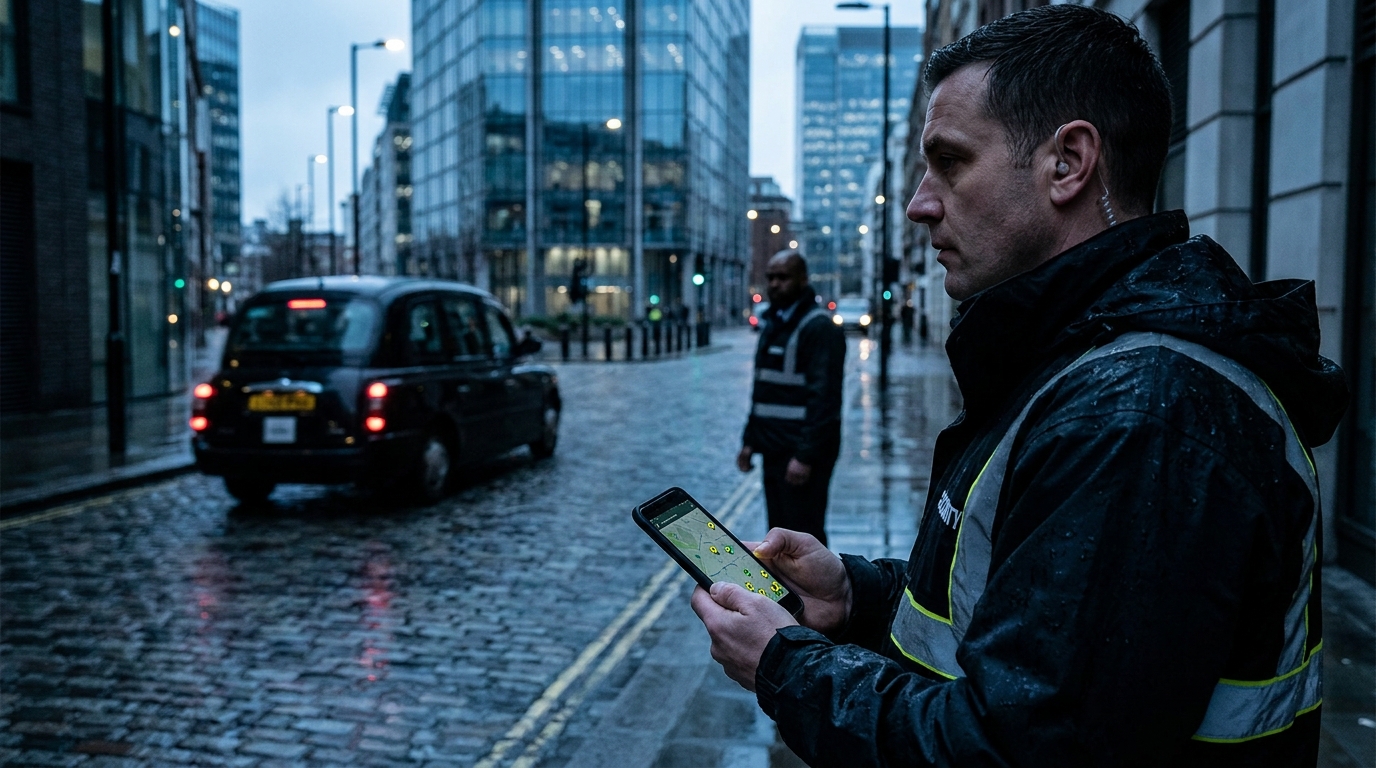
OnSiren connects officers to each other, to the businesses that deploy them and to the police — a shared intelligence platform, free for security officers. On shift, that means an officer can see and hear what colleagues nearby are dealing with, talk to them over push-to-talk, report an incident in seconds with a voice note from the scene, and start the day with a briefing from Alpha One, the AI in the system — situational awareness before they step out. No one has to hold the whole picture alone.
Why this makes the whole area safer
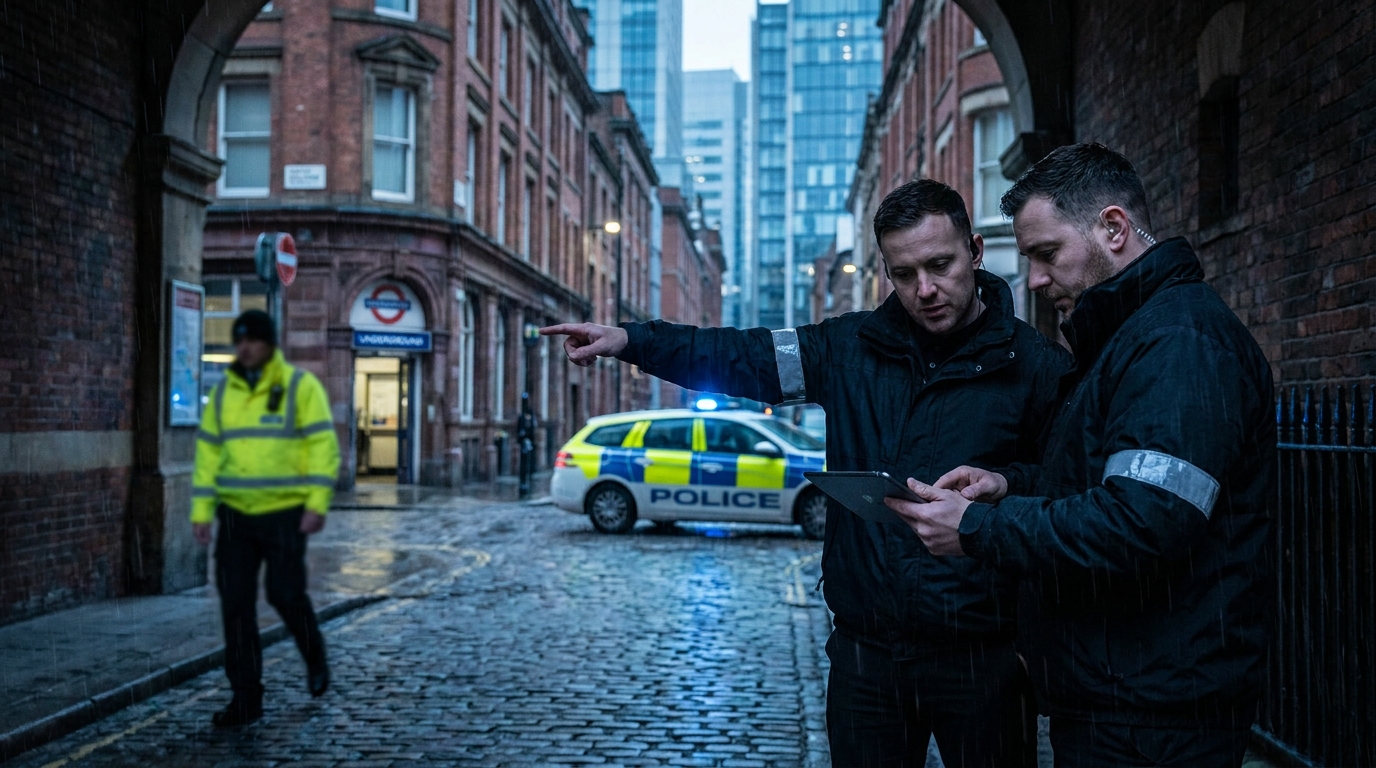
What helps the individual officer changes the picture for everyone around them. For the police, a steady flow of information means faster responses and sharper situational awareness across an area, from people who are trained, licensed and already there. For businesses and local authorities, a coordinated response to an incident makes a high street or business area measurably safer for the workers, customers and residents who use it. The same connection that ends an officer’s isolation is what makes a place safer to be in.
Backed by people who know the frontline
The team at OnSiren know this world better than most. It was founded by Shahzad Ali, who also built Get Licensed, the UK's leading platform for security officer training and licensing, through which hundreds of thousands of officers have been trained, drawing on more than two decades at the centre of the private security sector. Faron Alexander Paul, OnSiren’s Frontline Adviser, has spent years confronting violence on Britain's streets — work through which thousands of weapons have been taken out of circulation. People who have done that work are not impressed by technology for its own sake. They are persuaded by what protects people, and by what looks after those doing the protecting.
That is the principle at the heart of OnSiren: connect the security officers in an area, and the area becomes safer — for the officers, and for everyone they protect. Frontline. Connected.

